Welcome To Lyme Bytes!
Greetings and welcome to my Lyme disease blog, a comfy cozy (and sometimes crazy!) place for cutting-edge information, encouragement and insight into the fastest-growing epidemic disease in the United States. In this blog you will find everything from bug-killing strategies to immune system and hormone help, as well as lifestyle and spiritual suggestions for healing from chronic illness involving Lyme disease. The information contained within this blog is based upon my own healing journey and what I have learned over the past six years as I have been diligently digging and researching my way back to a better state of health. May you find it to be a source of hope, inspiration and wisdom in your own journey towards wellness.
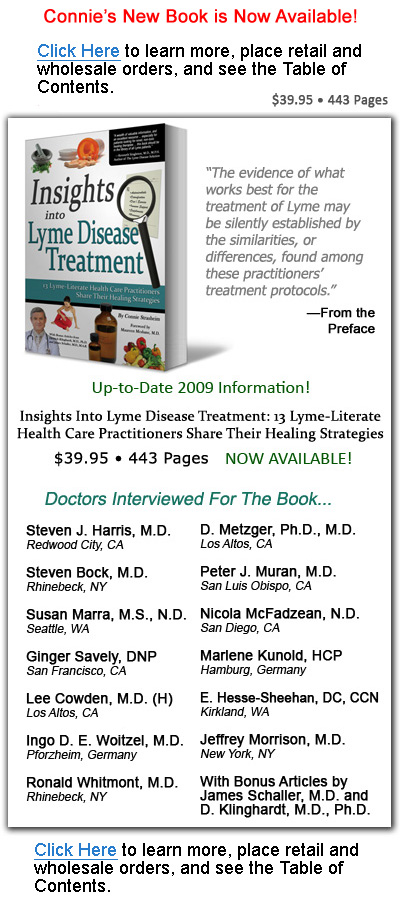
Learn More About The Thirteen Doctors Who Participated In My New Lyme Book!:
About the book:
443 Pages - $39.95
Published August, 2009
Written by Connie Strasheim
Learn More - Bulk Orders - Table of Contents
Thirteen Lyme-literate health care practitioners reveal their treatment strategies for chronic Lyme disease in new book.
Denver, Colorado—August, 2009. A new book, Insights Into Lyme Disease Treatment: Thirteen Lyme-Literate Health Care Practitioners Share Their Healing Strategies, provides people with Lyme disease and their physicians with current, cutting-edge information on the treatment of chronic Lyme disease and the corollary conditions that it causes.
It is a comprehensive resource, written from the perspective of thirteen Lyme disease experts, including eight Lyme-literate medical doctors (MD’s), two naturopathic doctors (ND’s), a “heilpraktiker” (or healing practitioner, as the German title translates into English) and one chiropractor and nutritionist. The training and education of the experts encompasses a broad range of disciplines, but most use a combination of allopathic, naturopathic, complementary and alternative medicine in their practices. Whatever their background, however, all are experienced in treating chronic Lyme disease.
The book includes each practitioner’s anti-microbial and detoxification protocols, as well as their recommended supportive treatments for the body. It also provides their perspectives on the challenges and roadblocks to healing.
According to the CDC, Centers for Disease Control and Prevention, Lyme disease is the fastest-growing infectious disease in the US, with more than 20,000 new cases reported each year. The CDC estimates, however, that only one in ten cases is reported, which means that there could be at least 200,000 new cases each year, and perhaps even many more than that.
Lyme disease can be treated successfully with antibiotics when - and if - it is caught early, while the Lyme spirochetes are still in the patient’s bloodstream and can be reached by antibiotics. If the disease goes undiagnosed, the spirochetes, (which are related to those that cause syphilis), can infiltrate the non-blood areas of the body, such as the nervous system, brain, heart, joints, and cartilage. The disease then becomes a multi-symptom, multi-system illness that wreaks havoc upon nearly all of the patient’s tissues and organs.
Once this happens, Lyme disease becomes chronic and difficult to diagnose. It may masquerade as a variety of other illnesses. Many physicians do not know how to effectively treat it. It devastates nearly every aspect of a person’s existence. ILADS, the International Lyme and Associated Diseases Society, estimates that most chronic Lyme disease sufferers experience a level of disability equivalent to that of a person who has suffered from a recent heart attack. As chronicled in the recently released documentary, "Under Our Skin: There's No Medicine For Someone Like You," those with chronic Lyme experience so much neurological and cognitive dysfunction that they end up losing their jobs, homes, mobility, and, in some cases, their lives.
For those who have been recently diagnosed with Lyme disease or who haven’t received adequate treatment help through the means that have been available to them, Insights Into Lyme Disease Treatment provides a comprehensive variety of effective, in-depth solutions. For the practitioner, it provides cutting-edge information on treatments that has not been published elsewhere.
The information in this book was obtained through interviews with the following thirteen health care practitioners:
Steve Harris, MD
Steven Bock, MD
Susan Marra, ND, MS
Ginger Savely, DNP
Lee Cowden, MD, MD (H)
Ingo Woitzel, MD
Ronald Whitmont, MD
Deborah Metzger, MD, PhD
Pete Muran, MD, MBA
Nicola McFadzean, ND
Marlene Kunold, “Heilpraktiker” (Healing Practitioner, Germany)
Elizabeth Hesse-Sheehan, DC, CCN
Jeffrey Morrison, MD
These practitioners were chosen on the basis of their expertise and experience in treating chronic Lyme disease. After the interviews, Ms. Strasheim wrote the book’s chapters, collaborating with the practitioners in the editing process, to make sure that all of the information from the interviews was accurately represented. Each chapter is devoted to the treatment approach of a particular practitioner, and covers, to a greater or lesser degree, the following:
1) Anti-microbial treatments for Lyme disease and associated infections, including antibiotics, herbs, homeopathic remedies, plant stem cells and biophotons
2) Information on how to support the body’s systems, which is an integral component to healing from chronic Lyme disease. Particular attention is given to the immune, endocrine, neurological, digestive and musculoskeletal systems
3) Treatments for symptomatic relief. Solutions for fatigue, pain, brain fog, depression, anxiety and insomnia are offered, as well as others
4) Detoxifying Lyme biotoxins, mold, candida, heavy metals and other environmental toxins
5) Treating food and environmental allergies
6) Lifestyle and dietary recommendations for faster healing
7) Strategies for healing emotional trauma
8) Patient and practitioner challenges to healing
9) Factors that influence healing
10) Suggestions for how family and friends can help the sick
11) Which anti-microbial treatments work and which don’t
12) How to discern whether Lyme disease is primary in patients’ overall symptom picture
The Author
Insights Into Lyme Disease was written by Connie Strasheim, a Lyme disease sufferer and health care researcher. She is the author of The Lyme Disease Survival Guide: Physical, Lifestyle and Emotional Strategies for Healing, a book that describes Lyme disease treatment strategies, as well as practical solutions for coping with the difficulties of chronic illness. Ms. Strasheim wrote Insights Into Lyme Disease Treatment when she realized that more information on how to treat chronic Lyme was sorely needed from the experts who treat Lyme patients. Prior to becoming ill from chronic Lyme disease, Ms. Strasheim worked as a Spanish instructor, medical interpreter and flight attendant. Ms. Strasheim lives in Denver, Colorado and is available for phone, on-line, and in-person interviews.
Availability
The book will retail for USD $39.95 and will be available via Ms. Strasheim’s blog at: http://www.lymebytes.blogspot.com and online book retailers in early to mid-September, 2009. It is published by BioMed Publishing Group.
Published August, 2009
Written by Connie Strasheim
Learn More - Bulk Orders - Table of Contents
Thirteen Lyme-literate health care practitioners reveal their treatment strategies for chronic Lyme disease in new book.
Denver, Colorado—August, 2009. A new book, Insights Into Lyme Disease Treatment: Thirteen Lyme-Literate Health Care Practitioners Share Their Healing Strategies, provides people with Lyme disease and their physicians with current, cutting-edge information on the treatment of chronic Lyme disease and the corollary conditions that it causes.
It is a comprehensive resource, written from the perspective of thirteen Lyme disease experts, including eight Lyme-literate medical doctors (MD’s), two naturopathic doctors (ND’s), a “heilpraktiker” (or healing practitioner, as the German title translates into English) and one chiropractor and nutritionist. The training and education of the experts encompasses a broad range of disciplines, but most use a combination of allopathic, naturopathic, complementary and alternative medicine in their practices. Whatever their background, however, all are experienced in treating chronic Lyme disease.
The book includes each practitioner’s anti-microbial and detoxification protocols, as well as their recommended supportive treatments for the body. It also provides their perspectives on the challenges and roadblocks to healing.
According to the CDC, Centers for Disease Control and Prevention, Lyme disease is the fastest-growing infectious disease in the US, with more than 20,000 new cases reported each year. The CDC estimates, however, that only one in ten cases is reported, which means that there could be at least 200,000 new cases each year, and perhaps even many more than that.
Lyme disease can be treated successfully with antibiotics when - and if - it is caught early, while the Lyme spirochetes are still in the patient’s bloodstream and can be reached by antibiotics. If the disease goes undiagnosed, the spirochetes, (which are related to those that cause syphilis), can infiltrate the non-blood areas of the body, such as the nervous system, brain, heart, joints, and cartilage. The disease then becomes a multi-symptom, multi-system illness that wreaks havoc upon nearly all of the patient’s tissues and organs.
Once this happens, Lyme disease becomes chronic and difficult to diagnose. It may masquerade as a variety of other illnesses. Many physicians do not know how to effectively treat it. It devastates nearly every aspect of a person’s existence. ILADS, the International Lyme and Associated Diseases Society, estimates that most chronic Lyme disease sufferers experience a level of disability equivalent to that of a person who has suffered from a recent heart attack. As chronicled in the recently released documentary, "Under Our Skin: There's No Medicine For Someone Like You," those with chronic Lyme experience so much neurological and cognitive dysfunction that they end up losing their jobs, homes, mobility, and, in some cases, their lives.
For those who have been recently diagnosed with Lyme disease or who haven’t received adequate treatment help through the means that have been available to them, Insights Into Lyme Disease Treatment provides a comprehensive variety of effective, in-depth solutions. For the practitioner, it provides cutting-edge information on treatments that has not been published elsewhere.
The information in this book was obtained through interviews with the following thirteen health care practitioners:
Steve Harris, MD
Steven Bock, MD
Susan Marra, ND, MS
Ginger Savely, DNP
Lee Cowden, MD, MD (H)
Ingo Woitzel, MD
Ronald Whitmont, MD
Deborah Metzger, MD, PhD
Pete Muran, MD, MBA
Nicola McFadzean, ND
Marlene Kunold, “Heilpraktiker” (Healing Practitioner, Germany)
Elizabeth Hesse-Sheehan, DC, CCN
Jeffrey Morrison, MD
These practitioners were chosen on the basis of their expertise and experience in treating chronic Lyme disease. After the interviews, Ms. Strasheim wrote the book’s chapters, collaborating with the practitioners in the editing process, to make sure that all of the information from the interviews was accurately represented. Each chapter is devoted to the treatment approach of a particular practitioner, and covers, to a greater or lesser degree, the following:
1) Anti-microbial treatments for Lyme disease and associated infections, including antibiotics, herbs, homeopathic remedies, plant stem cells and biophotons
2) Information on how to support the body’s systems, which is an integral component to healing from chronic Lyme disease. Particular attention is given to the immune, endocrine, neurological, digestive and musculoskeletal systems
3) Treatments for symptomatic relief. Solutions for fatigue, pain, brain fog, depression, anxiety and insomnia are offered, as well as others
4) Detoxifying Lyme biotoxins, mold, candida, heavy metals and other environmental toxins
5) Treating food and environmental allergies
6) Lifestyle and dietary recommendations for faster healing
7) Strategies for healing emotional trauma
8) Patient and practitioner challenges to healing
9) Factors that influence healing
10) Suggestions for how family and friends can help the sick
11) Which anti-microbial treatments work and which don’t
12) How to discern whether Lyme disease is primary in patients’ overall symptom picture
The Author
Insights Into Lyme Disease was written by Connie Strasheim, a Lyme disease sufferer and health care researcher. She is the author of The Lyme Disease Survival Guide: Physical, Lifestyle and Emotional Strategies for Healing, a book that describes Lyme disease treatment strategies, as well as practical solutions for coping with the difficulties of chronic illness. Ms. Strasheim wrote Insights Into Lyme Disease Treatment when she realized that more information on how to treat chronic Lyme was sorely needed from the experts who treat Lyme patients. Prior to becoming ill from chronic Lyme disease, Ms. Strasheim worked as a Spanish instructor, medical interpreter and flight attendant. Ms. Strasheim lives in Denver, Colorado and is available for phone, on-line, and in-person interviews.
Availability
The book will retail for USD $39.95 and will be available via Ms. Strasheim’s blog at: http://www.lymebytes.blogspot.com and online book retailers in early to mid-September, 2009. It is published by BioMed Publishing Group.
Wednesday, December 08, 2010
Life After Lyme
Over the past five months or so, I've swapped my slender banana-shaped body for that of an ostrich. You know- slender neck, slender legs, but bulky in the middle? Yup, that's the "new" me. It's taking some getting used to, but I'm trying to tell myself that the bulk is mostly good. The body can't put on muscle without putting on some fat when it has been deprived of essential biochemicals for over eight years. Lyme turned me into a "lyma" bean and my model-thin physique turned a few heads over the years but now nobody would mistake me for any kind of Cover Girl as my body builds muscle mass and then some.
I almost want to tell it, "You don't need to go into survival mode and made sure I'm adequately padded in case we have a setback!"
But this is the weight that I was at, at age twenty-nine, before I got super sick, and it's probably closer to the weight that I should be. People tell me that constitutionally, I look and seem stronger. I'm happy about that.
Still, the rapid weight gain has startled me a bit, and just to make sure that this ostrich isn't in danger of blossoming into an elephant, tonight I decided to do something that I haven't done for at least four years...get on a piece of cardiovascular exercise equipment. Yikes.
I have always walked, 3-4 days per week, for 30-40 minutes at a time, while suffering from chronic illness. Even on days when I felt half-dead, I would still force myself out the door to do a few laps around the block. But chronic fatigue and severe lower back and hip pain have mostly precluded me from doing much beyond that.
So I was reticent, but I decided to trust in the recent effects that prolotherapy injections have had upon my back and hip, and in the fact that lately, I have been stronger.
Amazingly, I managed thirty minutes of exercise on an elliptical machine, without my face turning tomato red and my body collapsing from fatigue. There's still tomorrow, and who knows what the body will do after it has had a night to think about the effects of this new, and rather intense, exercise, but I am elated. Could this be the sign of better days ahead?
As I step away from taking antimicrobial remedies and treating infections, and rejoice in this new found freedom, I yet realize that I will never be able to live as I did before Lyme disease. And not just because I can't, but because I don't want to.
Of course, my body has yet to repair and regenerate itself from the damage that Lyme has done to it, and will need all the nutritional and lifestyle support that I can feed it in order to accomplish that. It has been under a great many attacks and the only way it will continue to function normally is if I treat it like royalty. Because I'm a broken piece of glass that has been put back together, but I am not sure I will ever be the same.
And that's okay, because the lessons that I have learned along the way have meant that I now know how to care for myself in a way that will probably enable me to survive for longer than most people my age who have never had a chronic illness. I know what it takes to be a healthy person; organic food, nutrients, rest, exercise, prayer, peace, detoxification, happy thoughts, trust, and having relationships with other healthy people. There's more, but the life I live now is radically different than what it was pre-Lyme.
I used to work 14-hour days. I used to eat Cheerios and drink wine on a regular basis. I rushed through life. I ate toxic food, took no supplements, and didn't know the meaning of the word "detoxification." I had unhealthy relationships. I didn't know what God's love looked like. I went from day to day with a barrage of negative thoughts flooding my brain.
I still work too much, but not 14-hour days. I make sure I get enough sleep. Always.
I eat organic food. Dessert and wine are for nights out and special occasions. I take care of my body, spirit and soul, and am constantly mindful of when I am violating boundaries in myself or others. I have healthier relationships. I know what God's love looks like. The negative thoughts are fewer and more far between.
I am living true to myself, because I now know that the stakes are high if I don't.
I suppose that this was the gift of illness. To teach me a new path, and a new way of life. God doesn't ordain illness, but if the journey of disease will bring us to health, He may allow us to walk it for awhile.
And if health means having an ostrich-shaped body, then so be it. I rejoice in the little freedoms that I'm starting to experience and in even better days to come. But I'm still on the path, still learning.
I tell people, "If I can be healed, then you can, too." I had so much wrong with my body, spirit and soul, that there were many times I just wanted life to be over. I thought I was the most messed up person on this side of Kansas. But God can do anything, and I hope that my story will encourage you to believe, when circumstances clamor for you to not to. There is hope. There is a better life that awaits you, even if the road to happiness seems eternal.
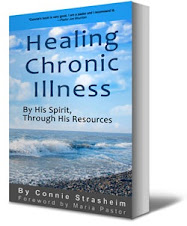
If you want to know more about the spiritual strategies that God taught me for healing, I invite you to check out my new book, Healing Chronic Illness: By His Spirit, Through His Resources." More information can be found at: http://www.healingchronicillness.org. This book is about supernatural healing, but it also goes into other factors that are involved in healing the mind, body and spirit besides supernatural encounters with God. It is the result of eight years of intense suffering, prayers, and research into mind-body healing and God's ways. I believe it will be an integral resource for some people's journey back to health, and a source of hope for the helpless and hopeless.
In the meantime, I pray that illness is for you, the same great teacher that it has been for me.
I almost want to tell it, "You don't need to go into survival mode and made sure I'm adequately padded in case we have a setback!"
But this is the weight that I was at, at age twenty-nine, before I got super sick, and it's probably closer to the weight that I should be. People tell me that constitutionally, I look and seem stronger. I'm happy about that.
Still, the rapid weight gain has startled me a bit, and just to make sure that this ostrich isn't in danger of blossoming into an elephant, tonight I decided to do something that I haven't done for at least four years...get on a piece of cardiovascular exercise equipment. Yikes.
I have always walked, 3-4 days per week, for 30-40 minutes at a time, while suffering from chronic illness. Even on days when I felt half-dead, I would still force myself out the door to do a few laps around the block. But chronic fatigue and severe lower back and hip pain have mostly precluded me from doing much beyond that.
So I was reticent, but I decided to trust in the recent effects that prolotherapy injections have had upon my back and hip, and in the fact that lately, I have been stronger.
Amazingly, I managed thirty minutes of exercise on an elliptical machine, without my face turning tomato red and my body collapsing from fatigue. There's still tomorrow, and who knows what the body will do after it has had a night to think about the effects of this new, and rather intense, exercise, but I am elated. Could this be the sign of better days ahead?
As I step away from taking antimicrobial remedies and treating infections, and rejoice in this new found freedom, I yet realize that I will never be able to live as I did before Lyme disease. And not just because I can't, but because I don't want to.
Of course, my body has yet to repair and regenerate itself from the damage that Lyme has done to it, and will need all the nutritional and lifestyle support that I can feed it in order to accomplish that. It has been under a great many attacks and the only way it will continue to function normally is if I treat it like royalty. Because I'm a broken piece of glass that has been put back together, but I am not sure I will ever be the same.
And that's okay, because the lessons that I have learned along the way have meant that I now know how to care for myself in a way that will probably enable me to survive for longer than most people my age who have never had a chronic illness. I know what it takes to be a healthy person; organic food, nutrients, rest, exercise, prayer, peace, detoxification, happy thoughts, trust, and having relationships with other healthy people. There's more, but the life I live now is radically different than what it was pre-Lyme.
I used to work 14-hour days. I used to eat Cheerios and drink wine on a regular basis. I rushed through life. I ate toxic food, took no supplements, and didn't know the meaning of the word "detoxification." I had unhealthy relationships. I didn't know what God's love looked like. I went from day to day with a barrage of negative thoughts flooding my brain.
I still work too much, but not 14-hour days. I make sure I get enough sleep. Always.
I eat organic food. Dessert and wine are for nights out and special occasions. I take care of my body, spirit and soul, and am constantly mindful of when I am violating boundaries in myself or others. I have healthier relationships. I know what God's love looks like. The negative thoughts are fewer and more far between.
I am living true to myself, because I now know that the stakes are high if I don't.
I suppose that this was the gift of illness. To teach me a new path, and a new way of life. God doesn't ordain illness, but if the journey of disease will bring us to health, He may allow us to walk it for awhile.
And if health means having an ostrich-shaped body, then so be it. I rejoice in the little freedoms that I'm starting to experience and in even better days to come. But I'm still on the path, still learning.
I tell people, "If I can be healed, then you can, too." I had so much wrong with my body, spirit and soul, that there were many times I just wanted life to be over. I thought I was the most messed up person on this side of Kansas. But God can do anything, and I hope that my story will encourage you to believe, when circumstances clamor for you to not to. There is hope. There is a better life that awaits you, even if the road to happiness seems eternal.
If you want to know more about the spiritual strategies that God taught me for healing, I invite you to check out my new book, Healing Chronic Illness: By His Spirit, Through His Resources." More information can be found at: http://www.healingchronicillness.org. This book is about supernatural healing, but it also goes into other factors that are involved in healing the mind, body and spirit besides supernatural encounters with God. It is the result of eight years of intense suffering, prayers, and research into mind-body healing and God's ways. I believe it will be an integral resource for some people's journey back to health, and a source of hope for the helpless and hopeless.
In the meantime, I pray that illness is for you, the same great teacher that it has been for me.
Subscribe to:
Post Comments (Atom)
4 comments:
It is not so easy to live after Lyme. Lyme disease can be difficult to diagnose in the evidence just because it is important that patients and physicians understand the symptoms.
your words give me courage to accept my new body image as well. it has been a bit of a learning curve as to how to dress this new ostrich shape and i am drawn to comfy leggings (to show off the skinny legs) yet large t-shirts to cover tummy and hips with a scarf around my slender neck. how about you? =D
Really this would become unforgettable experience for lyme disease patients. Your information about those experiences is truly amazing.
Such a great update, praise God! I appreciate your open about your difficulties, successful treatment of Lyme disease in the hope of giving a voice to face. Very happy for you.
Post a Comment